You know you need help. You’ve been meaning to find someone. But every time you sit down to look, you end up with ten tabs open, a few names saved, and no appointment booked.
Now it’s time to pick up your kids or get on a client call, so you close your laptop and tell yourself you’ll come back to it.
Finding support has become one more thing you’re responsible for figuring out.
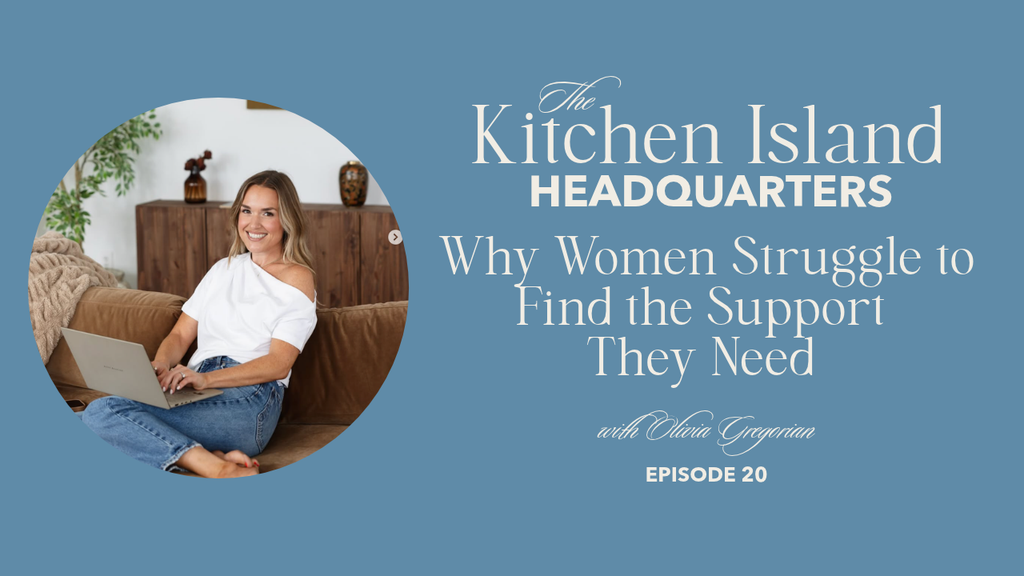
On this episode of The Kitchen Island, I sat down with Olivia Gregorian, founder of The List, to talk about why finding the right support can feel so overwhelming, even when there are plenty of options.
Olivia is a mom of two who built her business after experiencing that frustration herself. The List connects women and families with a curated network of providers and businesses across wellness, motherhood, and everyday life.
Our conversation covered the mental load of finding help, what makes a provider feel like the right fit, and how listening to women’s needs has shaped her business.
If you’re raising a family and running a business, there’s a lot here you’ll recognize.
Listen on your favorite podcast player:
The Work That Comes Before Getting Help
“Find someone who can help” sounds like a simple item on your to-do list.
But first, you have to figure out what kind of support you need. Then you have to research your options, understand the services, look at the cost, reach out, and find a time that works.
And that’s before you’ve even met the person.
Olivia shared that she put off seeing a pelvic floor physical therapist for roughly a year and a half. She could already picture the steps involved: the inquiry, the appointment, the paperwork, and the possibility of having to reschedule because something came up with her kids.
I understood that feeling immediately as a mom. The thought of finding another hour to research something can be enough for me to push it down the road.
When you’re already keeping track of school registration, client deadlines, and everything your family needs, your own support can keep landing at the bottom of the list.
You can know something matters and still struggle to make room for the process of getting it.
The Postpartum Experience That Led to The List
After having her second son, Olivia experienced postpartum depression. She eventually found a therapist and psychiatrist she loved, but finding them took at least a month during an already vulnerable time.
She described searching an online directory and filtering by location, insurance, and specialty. Even after narrowing it down, she still had an overwhelming number of results.
Without much else to go on, she found herself looking at headshots and trying to decide who seemed approachable.
That detail stuck with me. She had already recognized that she needed help. She was actively looking for it. And she still had to spend weeks figuring out where to turn.
Later, when she searched for nutrition support, she ran into another version of the same problem. There were people who could help, but finding the right person took time and energy.
Those experiences became the foundation for The List.
Olivia wanted to create a place where women could begin their search with a smaller, more personal selection of providers. Something that felt closer to getting a recommendation from a friend.
More Options Don’t Make Choosing Easier
Having access to a directory doesn’t automatically tell you who to contact.
You still need to understand what someone does, whether they work with people in your situation, and what it might feel like to talk to them.
Olivia shared a conversation with a woman who didn’t understand the acronyms and credentials on providers’ websites. She was trying to find support, but the language made it difficult to know what she needed.
That’s an easy thing to overlook when you’re the expert.
You know what your qualifications mean. You know the differences between your services. The person reading your website may be trying to understand all of it for the first time.
For someone who is already overwhelmed, that extra work can make reaching out harder.
This is part of what Olivia looks for when she meets potential providers for The List. Can they explain their work in a way that feels clear and approachable? Do they take the time to understand the person they’re helping?
A beautiful website might get your attention. You still need enough information to feel comfortable taking the next step.
So… What Makes a Provider Feel Like the Right Fit?
Olivia wants The List to feel like a recommendation from your best friend.
She personally meets with potential members to learn about their approach and how they communicate. She wants to feel comfortable recommending them to someone she cares about.
That doesn’t mean every provider will be the right fit for every person.
The goal is to give you a more useful starting point.
The profiles also include details about the person behind the business. Alongside their professional information, you might learn what they enjoy doing on the weekend or what they’re currently watching.
Those details can give you a point of connection before you meet.
I think about how much I valued the relationship I had with my private midwife during pregnancy. She came to my home, spent time with me, and got to know me. I felt comfortable and taken care of.
That feeling was a meaningful part of the experience.
For Olivia, helping women learn more about a provider before reaching out is one way to make the search feel less intimidating.
Support Can Extend Beyond Health and Wellness
The List began with Olivia’s own experience finding wellness support. As she started asking women what else they were struggling to find, the answers expanded her idea of what the business could offer.
Women were asking for female CPAs. Others wanted a real estate agent who understood first-time homebuyers and young families.
These were searches Olivia hadn’t necessarily expected, but the underlying need was familiar: Where do I find someone who understands what I need?
As a business owner, I loved this part of our conversation.
She had a clear reason for starting her business, and she was willing to listen when her community showed her other ways it could help.
The List remains rooted in wellness, while also making room for support with home, finances, and everyday life.
That matters when you’re a mom and a business owner. The things you need help with don’t always fit neatly into one category.
Advice for Service Providers: Make it Easier to Reach You
There’s a useful takeaway here for those of us who provide services, too.
By the time someone finds your website, they may have already spent weeks thinking about getting help. Your inquiry process is an opportunity to make that next step easier.
Explain who you help in language your potential client understands. Make it clear how to contact you and what will happen afterward.
If someone submits a form, let them know when they can expect a response. If they need to book a call, make the link easy to find.
Those small details help someone feel guided from the beginning.
Olivia also shared an unexpected benefit of building The List: providers started connecting with each other and making referrals. Getting to know businesses that complement your own can help you offer a useful next step when someone needs support beyond your services.
You Can Start With One Thing
One point Olivia made was that The List isn’t meant to leave women feeling like they need an entire team of providers.
It’s there for when you need help in a particular area.
That feels like an important distinction when you already have a lot on your plate. You don’t need another list of things you should be doing.
Think about one area where you’ve been wanting support. Maybe it’s an appointment you keep postponing or a task you’re ready to hand over.
Your next step can be asking someone you trust for a recommendation or sending one inquiry. You don’t have to solve everything at once.
Olivia’s hope is simple: make finding support a little easier. Help someone spend less time searching and get closer to the person who can help.
To learn more about The List and explore its provider directory, visit The List. You can also connect with Olivia on Instagram at @thelistwellness.
Let’s Connect:
Olivia’s Website: https://www.thelistwellness.com/
Follow Olivia and The List on Instagram: The List Wellness
Free Inquiry Workflow Guide: click here to download
Website: kellymccracken.co
Work with Me: kellymccracken.co/services
Instagram: instagram.com/kellymccracken.co
Podcast Show Notes: kellymccracken.co/podcast







We should team up!
And if you still have questions about how to set up Dubsado…
Your expertise belongs in your craft more than your CRM. Bringing in a pro to do the strategic thinking and heavy lifting means that you’re never stuck Googling, experimenting, or muddling through something that only kind of works.
When you book a Dubsado setup for your business, we get to skip right over any implementation growing pains or learning just for learning’s sake. As a Certified Dubsado Specialist, I build exactly what you need, and then show you exactly what you need to do to keep the system running smoothly.

